Showing posts with label chronic pain. Show all posts

Tuesday, May 8, 2018

WITHDRAWAL OF OPIOIDS AND PAIN MANAGEMENT WITHOUT OPIOIDS
By Dr Forest Tennant 


We are pleased to share information from Dr. Forest Tennant, grandfather of PracticalPainManagement.com, teacher of intractable pain and arachnoiditis management. Read more about Dr. Tennant here.

Arachnoiditis is a complication of epidural steroid injections (ESI) wherein the normal layer of arachnoid tissue is chronically inflamed and painful. Read our review article about epidural steroid injections here. There is no cure and many patients have been driven to suicide, most recently Jen on Twitter.

It is because of Jen that we post this for wide dissemination and the spread of hope to those with intractable pain. Share with your doctors, neighbors and patients with pain, especially pain that lasts 24 hours:


  1. HOMEOPATHIC REMEDIES

TAURINE                                                         2000 MG EVERY 4-6 HRS
TRYPTOPHAN                                                500 – 1000 MG EVERY 4-6 HRS

TAKE ANY 2 OF THESE:


BOSWELLIA                                                    
CBD OIL/EXTRACTS                                        
CURCUMIN/TUMERIC                                   
GLUTAMINE/GABA                                       
KRATOM   
PALMITOLYLETHANOLAMIDE (PEA)              
SERRAPEPTASE
WHITE WILLOW BARK                                   

2. SLEEP

MELATONIN 10 – 20 MG WITH BENADRYL 25 MG

3. PRESCRIPTION MEDICATIONS FOR PAIN (NON-OPIOIDS)

  1. AMPHETAMINE SALTS (ADDERAL®): 10 - 20 MG   OR   METHYLPHENIDATE 10 – 20 MG: USE 2 - 3 TIMES/DAY
  2. CLONIDINE 0.1 MG: USE 3-4 TIMES/DAY
  3. TOPIRAMATE (TOPAMAX®): 50 – 100 MG, 2X/DAY  OR GABAPENTIN 100 MG    USE 3 TIMES/DAY
~ ~ ~
This regimen is from Dr. Forest Tennant, who has faithfully honored many patients by striving to relieve their intractable pain and suffering. Thank you, Dr. Tennant.
You can contribute to Dr. Tennant's defense fund (his office was raided by the DEA) here and read more about his many contributions here.

Monday, May 7, 2018

What is The Chronic Life Diet?

by Dr Margaret Aranda

If your waistline is quite particularly bloated or your belly hangs over your pant belt line, this is for you. If you need to lose 150 pounds or have a chronic illness(es), or have had failed back surgery, you may have chronic inflammation that leads to chronic metabolic syndrome, pre-diabetes, and diabetes.
When a body process becomes "chronic", that usually means it lasted three months or longer. The body's response to acute or chronic conditions leaves the cellular milieu with cytokines and signaling factors in abundance: T and B cells, macrophages, substance P, tumor necrosis factor, COX2, glutamate, NMDAR, TGF-Beta, IGF-1, PDGFR, VEGF, and PGE2.

At The MD, PhD is In, we have a key focus on chronic diseases and pain. The key is diet. So let's learn about a logical and lifetime-worthy endeavor to fight such things as heart disease, diabetes, bacteria, fungus, viruses, parasites, aging, cancer and infections. But now, we're calling it
The Chronic Life Diet
~ by Dr. Margaret Aranda
What is The Chronic Life Diet? It is anti-inflammatory and immune-boosting, promoting the body's own defenses. It's also immunonutrition. The immune system benefits by molecules that fight infection. And of all things, it turns out that proper and focused nutrition and encourages a healthy lifestyle improves this process:

🍏 🍎🍏 🍎🍏 🍎🍏 🍎

Immune System Boost

+

                 Targeted Nutrition                   

= "Immunonutrition" = "The Chronic Life Diet"

🍆 🍉 🍆  🍅  🍆  🌶 🍆 🍉 🍆


5 Facts about "The Chronic Life Diet"

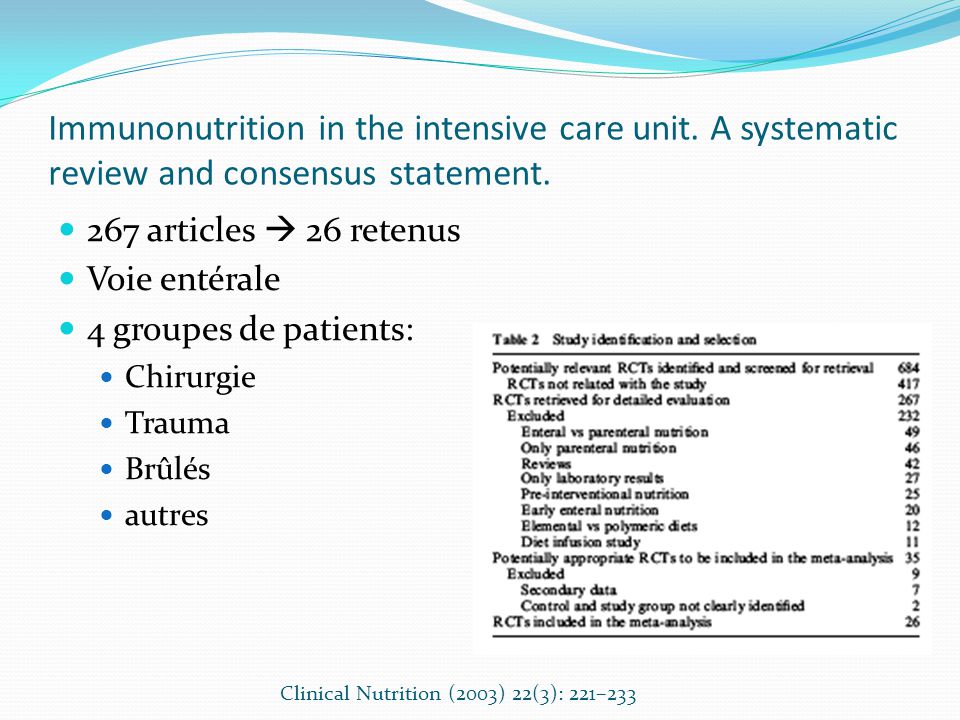
  1. History: The Chronic Life Diet increases anti-inflammation and decreases allergic or histamine-releasing foods. It is founded on the concept of immunonutrition, studied and used in worldwide Intensive Care Units (ICUs) since at least 2003. Today, we extend it from the ICU to the breakfast table as The Chronic Life Diet. Fish oil, for example, when given to patients in the ICU, prevents heart attacks and other inflammatory processes:
immunoslide
Immunonutrition has been used in worldwide Surgical Intensive Care Units.
~ ~ ~
2. Anti-inflammatory: Foods with anti-inflammatory properties can slow aging, and decrease the chance of chronic metabolic syndrome: obesity, diabetes, heart disease and cancer. All the major killers can be linked to inflammatory processes. Read our article,  The Chronic Metabolic Syndrome is Killing US. It is a major predictor of obesity, diabetes, heart disease and stroke.


healthicine-org
The Top Killers, all Treated by The Chronic Life Diet.
 
3. Immunity in the Gut: The gut contains over 70% of the body's immune system. Foods in The Chronic Life Diet change the gut flora to increase the "good" bacteria and decrease the "bad" bacteria. It cleanses out toxins and boosts the immune system. It lowers anti-oxidants, restores gut lining leaks, and fosters good health, from the inside out. This is exactly why probiotics are so important to your overall health.
missinghumanmanual-comimmune
The Importance of the Gut in Fighting Infection.
~ ~ ~

Rich sources of anti-inflammatatory foods:

fish, nuts, fruits, vegetables and herbs.

~The MD, PhD is In
4. Food is Medicine: What you eat either makes you well or makes you sick; it is also good for mental health due to sensory stimulation of the nose, eyes, ears and taste buds.


champagneglassestoast


The only sensation of the 5 senses that is 'left out' of the food sensory stimulation is the ears.
This is why the tradition of "toasting" wine glasses was founded, as the ears then get to participate in the dining experience.

The Chronic Life Diet focuses on food that is good medicine to the body, mind and soul.
The dining experience is to be enjoyed, food brings a certain happiness or hedonics to our lives, so make sure and surround yourself with positive people who love lifting you up to keep moving onward and forward!

5. Anti-Inflammatory: Don't eat out of a box. Eventually, one should be free of sugar, processed foods, artificial color, preservatives, cereal, bread, pasta, rice, carbonated soda, power bars, yogurt with fruit and sugar, and other foods that just do not decrease inflammation.


When you eat food, it needs to fight for your health.
It needs to reverse (or at least not aggravate) your body systems.
This is the concept:

We Combat The Chronic Life's inflammation with

The Chronic Life Diet.

~ The MD, PhD is In

~ ~ ~~ ~ ~

Additional Articles by Dr. Margaret Aranda


~ ~ ~

Read Dr Margaret Aranda's Memoirs:


~ ~ ~

Follow Me: Let's Tweet  and be a FB Caring Friend, too!
LIKE my Public Figure FB Page if you will, please!


screen-shot-2017-01-29-at-3-42-35-am

Join The Rebel Patient on Twitter and Facebook

  Follow Dr Aranda on Twitter | Facebook | LinkedIn | TheChronicLifeDiet.com\ | The MD, PhD Is In

Friday, April 13, 2018

7 Ways that Chronic Pain Changes the Brain


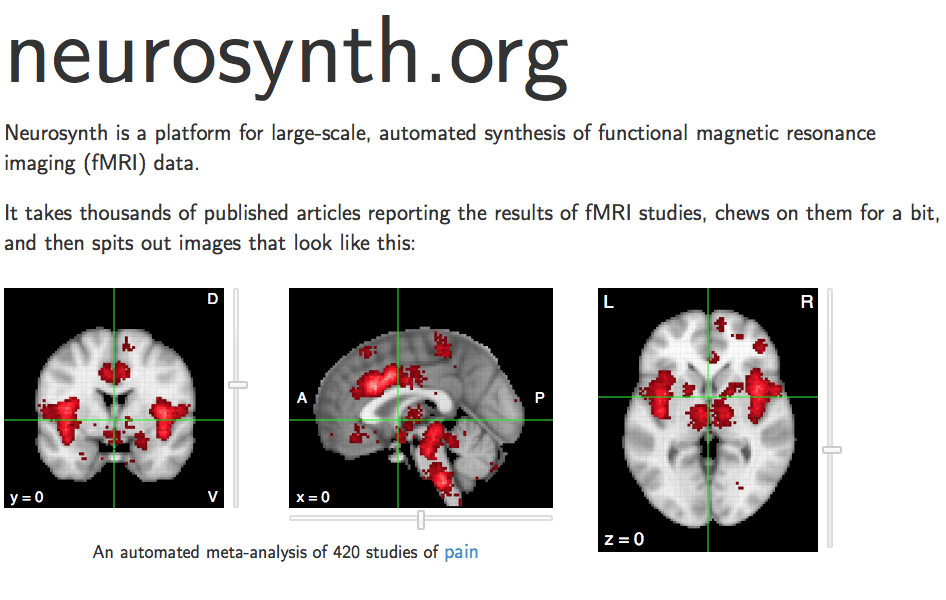
7 Ways that Chronic Pain Changes the Brain: An automated meta-analysis of 420 imaging studies - pain's effect on the brain. neurosynth.org uses functional connectivity and coactivation mapping from thousands of MRI images (each comprised of many cuts of images), automated to show a final result of pain's effect on the brain. Created and Read More ...

~ ~ ~~ ~ ~

Additional Articles by Dr. Margaret Aranda


~ ~ ~

Read Dr Margaret Aranda's Memoirs:


~ ~ ~

Follow Me: Let's Tweet  and be a FB Caring Friend, too!
LIKE my Public Figure FB Page if you will, please!


screen-shot-2017-01-29-at-3-42-35-am

Join The Rebel Patient on Twitter and Facebook

  Follow Dr Aranda on Twitter | Facebook | LinkedIn | TheChronicLifeDiet.com\ | The MD, PhD Is In


This article was previously published by Dr Aranda on her companion website, TheChronicLifeDiet.com

Sunday, April 8, 2018

7 Ways that Chronic Pain Changes the Brain

by Dr. Margaret Aranda

  1. An automated meta-analysis of 420 imaging studies - pain's effect on the brain.

    neurosynth.org uses functional connectivity and coactivation mapping from thousands of MRI images (each comprised of many cuts of images) are automated to show a final result of pain's effect on the brain. Created and maintained by Tal Yarkoni. Supported by NIH Grant R01MH096906.
[caption id="attachment_7076" align="aligncenter" width="601"]Neurosynth.org Automates 420 MRI Brain Images on: Pain. These are the brain areas affected by pain.[/caption]

2.  Chronic back pain. Touch-pain circuits shape-shift to emotional circuits.

Hashmi JA, Balike MD, Baria AT, et al. Shape shifting pain: chronicification of back pain shifts brain representation from nociceptive to emotional circuits. Brain. 2013 Sep; 136(Pt 9): 2751-2768. https://www.ncbi.nlm.nih.gov/pubmed/23983029
[caption id="attachment_6942" align="aligncenter" width="309"]1.Chronic back pain causes shape-shifting pain that moves from pain-touch to emotional circuits Hashmi JA, Balike MD, Baria AT, et al. Brain. 2013[/caption]


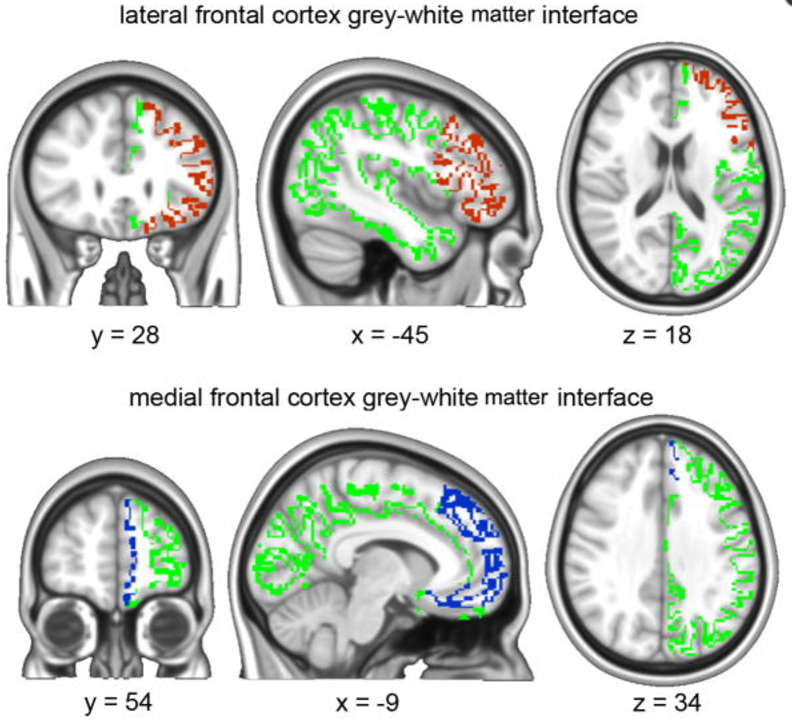
3.  Chronic back pain. Structural changes in the brain are hard-wired, predicting who will develop it after one year.

Mansour AR, Baliki MN, Huang L, et al. Brain white matter structural properties predict transition to chronic pain. Pain. 2013 Oct; 154(10): 2160-2168. https://www.ncbi.nlm.nih.gov/pubmed/?term=10.1016%2Fj.pain.2013.06.044 
[caption id="attachment_6947" align="aligncenter" width="370"]2.Brain white matter may be hard-wired to predict who will get “chronic” pain Mansour AR, Baliki MN, Huang L, et al. Pain. 2013[/caption]

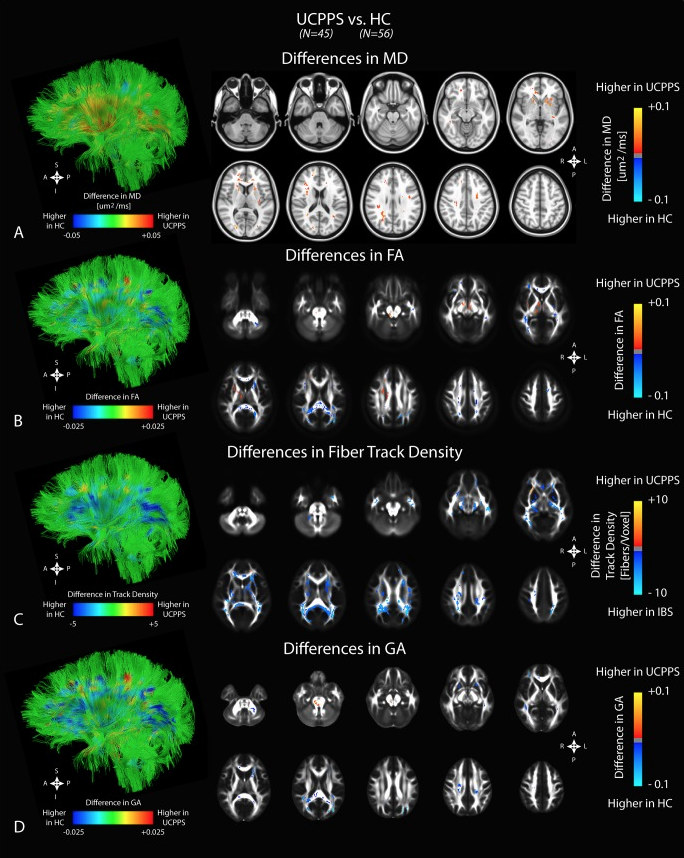
4.  Chronic pelvic pain. Causes microstructural changes in brain areas in how pain is felt, and how it is processed.

Woodworth D, Mayer E, Leu K, er al. Unique microstructural changes in the brain associated with urological chronic pelvic pain syndrome (UCPPS) revealed by diffusion tensor MRI, super-resolution track density imaging, and statistical parameter mapping: A MAPP Network neuroimaging study. PLoS One. 2015 Ovt 13; 10(10):e0140350. https://www.ncbi.nlm.nih.gov/pubmed/?term=Microstructural+changes+with+chronic+prostatitis%2Fchronic+pain+syndrome

[caption id="attachment_6955" align="alignnone" width="684"]Screen Shot 2017-07-17 at 10.53.29 PM Unique microstructural changes in the brain associated with urological chronic pelvic pain syndrome (UCPPS) revealed by diffusion tensor MRI, super-resolution track density imaging, and statistical parameter mapping: A MAPP Network neuroimaging study. 2015.[/caption]


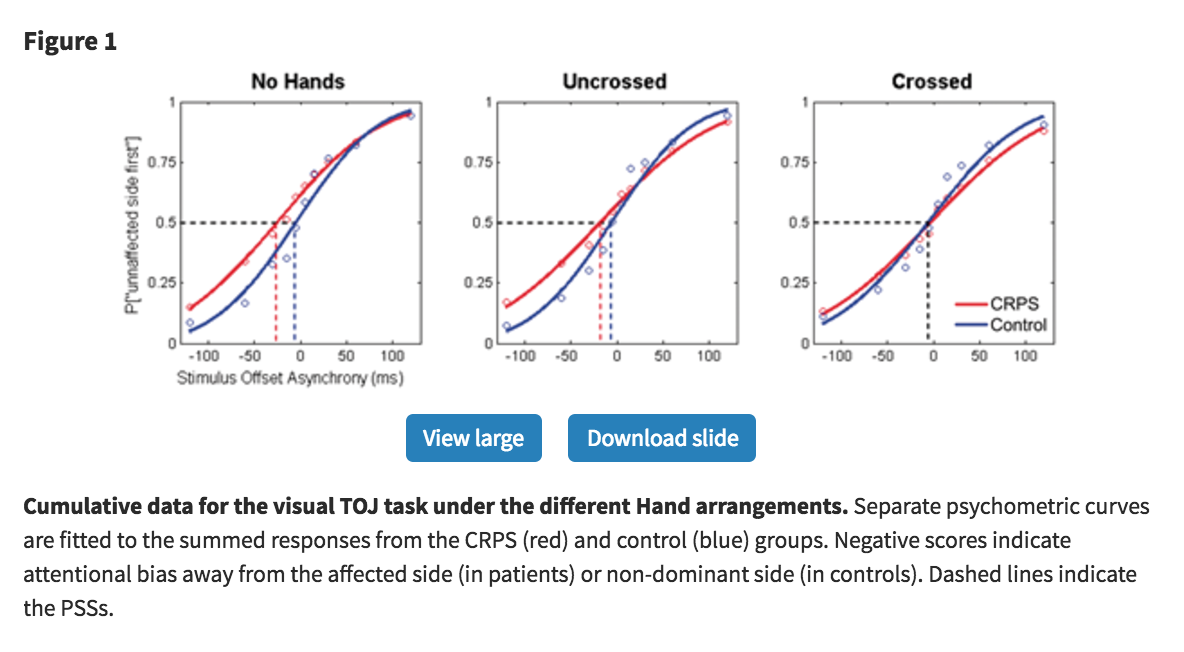
5. Chronic Regional Pain Syndrome (CRPS). In "the suicide disease",  inattention in near space may occur together with distorted body perception.

Janet H. Bultitude, Ian Walker, Charles Spence; Space-based bias of covert visual attention in complex regional pain syndrome. Brain 2017 awx152. doi: 10.1093/brain/awx152 https://academic.oup.com/brain/article-lookup/doi/10.1093/brain/awx152 doi: 10.1093/brain/awx152

[caption id="attachment_7032" align="alignnone" width="1184"]Complex Regional Pain Syndrome, CRPS. The "suicide disease". Space-based bias of covert visual attention in complex regional pain syndrome. 2017.[/caption]

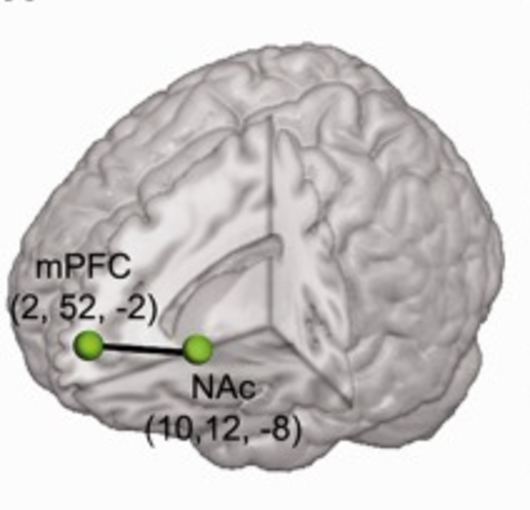
6. Chronic Pain. Vulnerability to develop a painful condition relates to two brain regions: the reward-motivation and the Descending Pain Modulatory System (DPMS).

Denk F, McMahon SB, and Tracey, I. Pain vulnerability: a neurobiological perspective. Nature Neuroscience 2014: 17, 192-200. http://www.nature.com/neuro/journal/v17/n2/full/nn.3628.html
[caption id="attachment_7040" align="alignnone" width="1098"]CRPS exhibits brain vulnerability in reward center, motivation/learning & descending modulation. Pain vulnerability: a neurobiological perspective. 2014.[/caption]

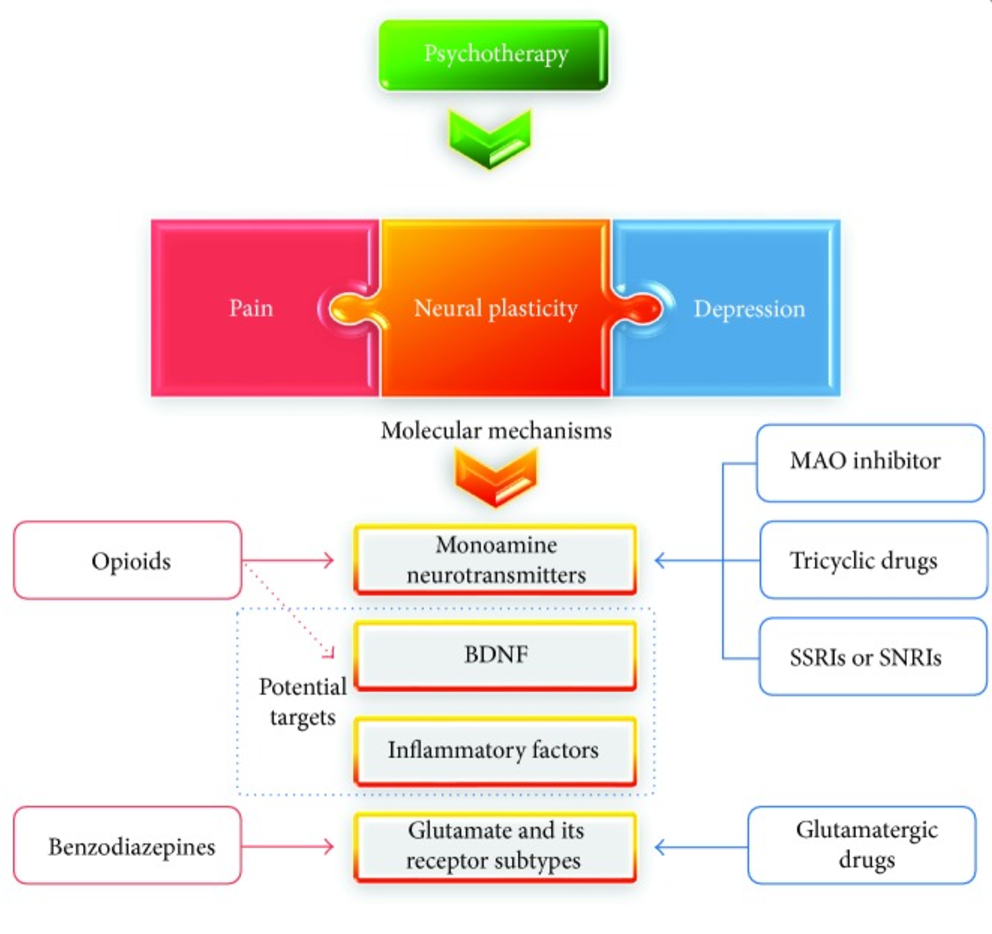
7. Chronic pain and depression. Various drugs act at different sites in the cascade of neuroplasticity that cause chronic pain to develop into depression.

Shang J, Liu S, Wang Y, Cui R, and Zhang X. The Link between depression and chronic pain: neural mechanisms in the brain. Neural Plast. June 19, 2017; 9724371. https://www.ncbi.nlm.nih.gov/pmc/articles/PMC5494581/
[caption id="attachment_7053" align="alignnone" width="992"]Chronic Pain Leads to Depression The Link between Depression and Chronic Pain: Neural Mechanisms in the Brain.
It is clear that pain changes the brain. From the last study, released on June 19, 2017, one sees the importance of neuroplasticity that modulates pain input to the brain. Pain leads to depression, which can then feed back to make the pain worse. These molecular mechanisms can be modified by opioids, benzodiazepines, MAO inhibitors, tricyclic drugs, serotonin-receptor inhibitors, and glutamatergic drugs.
# # #
THE END
# # #


This article was originally published on Dr. Aranda's companion site, The MD, PhD Is In.

Thursday, September 8, 2016

Backpack and Back Pain 2016

 / by Dr Margaret Aranda /


 Is it just me?
Or do you see?
Children with backpacks to their knees.
This is worse that just "not a breeze."
It's damaging to our children, who should not complain of pain.


The data are in to show that heavy backpacks on are children are more that just silly show. The heavy backpacks to their knees also can damage the spine. So listen to your children if they complain about neck or spine pain. We don't want them growing up to be chronic back pain patients.

And as an aside, please don't just chide you child for complaining about pain. Many, many pains are not "just growing pains." They can be harbingers of badness that remains into the adult years. Or, bone pain can also be a sign of something worse that needs to be seen by 2nd Opinion doctors. And third. And fourth. Because I want you to listen to your child's complaints.

Abnormal posture can commonly be seen. Seriously. How do we get used to seeing our children like this (See Image 1)?


Image 1. Huge Backpacks for Our Children.  How in the world did we ever become desensitized to see them screeching and reaching, twisting and moaning, grunting and rolling their eyes? Do you see? If we get used to seeing our children this way, what does that say about how we as adults take for granted the infliction of damage that we do on our own backs, in the same way? For centuries, women and men have carried heavy loads on top of their heads, using the shoulders for balance. Keep that in mind. Photo Courtesy StemChiro.com


Problems with a Backpack

  • Not ergonomic: misshaped and does not conform to the human body
  • Improper padding: the shoulder straps are a huge culprit
  • Weight shifting: lunch bags are put under pressure; so is the spine skeleton and muscles
  • No adherence to weight limits: WoW. We need to know a bag's weight limit
  • Improperly worn: WoW Again. I didn't know there was a 'right' way to wear one
  • Spinal disc abnormalities: decreased disc height, disc compression
  • Spinal bone abnormalities: left or right abnormal spine curvature can lead to adult spine disc herniation and a surgical emergency due to decreased nerve function (See Image 2)


Image 2. Spinal Curvature Damage in Our Children. 
This is what our backpacks can do. Let's not create chronic pain patients. No one wants that for you.
Image Courtesy NovaChiropractic.


  • Medical Costs: 5,000 Emergency Room visits for school backpacks / year 
  • Misinformation: the source of the medical information needs to have no conflict of interest for interventional procedures (that is, a surgical article can't advise surgery)
  • Poor posture: hump-back decreases the upper thoracic space to perfuse the heart and lungs (See Image 3)


Image 3. Correct Way to Carry a Backpack. 
Note the shoulders and elbows are back. I think the feet can be wider, for better balance.
Photo Courtesy NovaChiropractic.


Solutions
  • Increase Awareness: it's not just a funny-looking picture
  • Prevention: don't our children deserve a look at the best prevention?
  • A Pain Clinic: Specialists with post-doctoral training study extra long to treat pain
  • Treatment: pediatrics, Pain Clinic, orthopedics, physiology, physical therapy, kinesiology 
  • More Treatment: sports medicine, neurology, traumatology, neurosurgery and more
  • Hold that thought on Pain Clinic for adults - important information below

Prevention


  • I think we should buy a school backpack as if our child is going camping
  • Consider to include a small Emergency Kit of Contact Information, bandaids, water 
  • Go for a backpack that is well-made
  • I think a backpack could be considered camping or sports activity equipment
  • Lightweight, good padding especially on the shoulders and lower back
  • Thick shoulder straps that don't tug on the clothes
  • Small compartments for separate items: distributes the weight
  • Compartments: allow for selection of items without digging or contortion
  • Hip strap: braces the pelvis and brings great stabilization to the spine
  • Never share a backpack with another child -you never know if there's lice
  • Wheels: now why didn't we think of that? Big wheels that go over bumps in the cement
  • Don't let the backpack go down to the buttocks
  • Help your child clean out her backpack each day, and each weekend, too
  • Check the manufacturer for regular cleaning. Don't want ticks hitching a ride
  • As with all prevention of low back pain, lift from the knees -keep back straight- not bent over


Image 4. Ergonomic Backpacks for School.
Child-friendly, rolling backpacks are quite a good remedy when used properly. 
No rides.
I think this is just as important as brushing your teeth. I just do.
Image Courtesy Under Armor.


And What about the Weight Max for a Child's Backpack?

According to Max Health, 

"For optimal spinal health, the American Chiropractic Association recommends a backpack that is 5-10% of your child’s weight. The weight of a backpack should not exceed 15% of the child’s body weight."

For Adult Back Pain - I Saved the Best for Last:
There you go!


So now as an adult, you have chronic back pain! You're in for a treat as #BackPainDay2016 is on 9/11 from 10 - 4 PST Live Streamed and FREE here: +Stanford Pain Medicine 

Look at all the comprehensive information to be given to health care professionals, Caregivers, Patients, Advocates, Invisible Illnesses, Chronic Pain, All (See Image 5):


Image 5. Stanford Back Pain Education Day, 2016. Twitter +Stanford Pain Medicine to keep up with real-time information! +Stanford Pain Medicine Tweets: 

"For those who cannot attend in-person, we will be live streaming #BackPainDay2016 for free! https://t.co/JCIeRZvtDX "


Be Blessed!
~ ~ ~ ~ ~ ~ ~

#DrMargaretAranda
Copyright©️ 2016, Aranda MD Enterprises. All rights reserved. 
Medical Disclaimer: This article is not meant to provide medical advice, cure, or treatment. Always see your medical professional for persistent complaints. Likewise, seek medical treatment if your child has any persistent complaints. 

For Positive Parenting, I like to avoid saying, "It's all in your head." That's just me.
~ ~ ~ 

Dr Margaret Aranda is disabled after a tragic car accident left her bed-ridden for over 10 years now. She is a Public Figure in Patient Advocacy for Invisible Illnesses, having been told that her traumatic brain injuries (x 2), vertebral artery dissection and dysautonomia were not real. Please listen to your children and keep going to another specialist or referral if you suffer from persistent complaints. 

Dr Aranda says, "Thank you for reading my writings!"

Monday, August 3, 2015

My Gratitude List

by Rev. Margaret Aranda, MD, Ph.D.


Background: Keck School of Medicine at USC Graduate, Stanford-trained in Anesthesiology and Critical Care, Doctorate in Forensic Medicine. In 2006, was in a tragic car accident that left me bed-bound with a traumatic brain injury and dysautonomia, for the majority of the last 9 years. Then a doctor dropped me to the floor during a neurologic exam in 2015, giving me another traumatic brain injury. I keep pressing on.


My Gratitude List

1. That I went to the door of Heaven during a Near-Death Experience, and was allowed to receive my request to come back to earth;

2. That I have faith that my symptoms, with God's help, shall improve with time;

3. That I know how to love;

4. That I am grateful for opening my eyes every morning;

5. That I thank God for another day, each and every day;

6. That I don't have to live with a continuous iv any more;

7. That I can still be a Mommy, a teacher, and a Reverend.

8. That I know how to count my blessings; today, that is enough for me.

 For More, Click Here (especially Bloggers):


******************************************************************
Dr Aranda's Short Stories


Age 31: The Color Blue

WITHDRAWAL OF OPIOIDS AND PAIN MANAGEMENT WITHOUT OPIOIDS By Dr Forest Tennant   We are pleased to share information from Dr. Forest Ten...